Selective Pallet Racking
Modular back-to-back rows provide direct access to individual pallets. Layout and beam levels are matched to pallet dimensions, loads and handling equipment.
Enquire about this system ↗Industrial racking for warehouses, production facilities and storage areas.
Prepare an enquiry ↗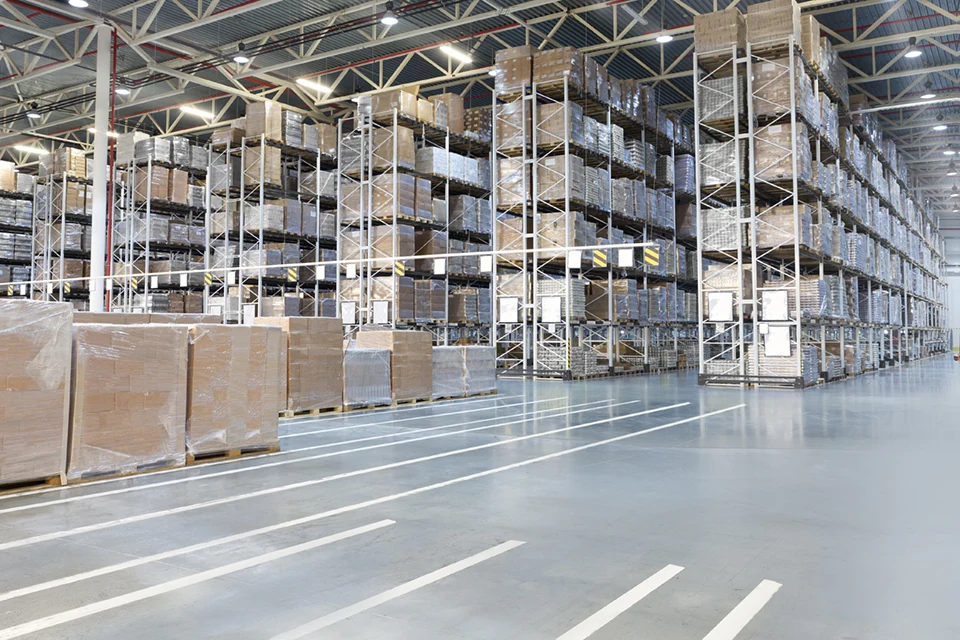
PPI supplies industrial racking systems for different storage requirements. A useful starting point is the load to be stored, the available floor space and the way goods are accessed. Share your layout and storage needs to discuss the product scope.
Explore 21 storage and automation solutions. Share your layout, load data and operating flow with PPI to discuss product supply and installation scope.
Modular back-to-back rows provide direct access to individual pallets. Layout and beam levels are matched to pallet dimensions, loads and handling equipment.
Enquire about this system ↗Deep storage lanes suit large quantities of similar palletized goods. The forklift enters the lane; one-sided operation commonly follows a last-in, first-out sequence.
Enquire about this system ↗Two pallets are stored in depth to reduce aisle requirements. Rear-pallet access requires compatible reach equipment and suits grouped stock with similar characteristics.
Enquire about this system ↗High-bay storage with reduced aisle widths uses dedicated narrow-aisle handling equipment. Aisle geometry, usable height and truck compatibility guide the configuration.
Enquire about this system ↗Inclined roller lanes move pallets towards the retrieval point. Pallet quality, braking and the chosen loading arrangement determine suitable FIFO or LIFO operation.
Enquire about this system ↗Walkway levels use warehouse height for manual picking of boxes and individual items. Stairs, loading gates and transfer arrangements are planned around the workflow.
Enquire about this system ↗Cartons advance along inclined roller tracks to a reachable picking face. Suitable for replenishment, order preparation and production-line component supply.
Enquire about this system ↗Modular shelves for manually handled cartons and smaller goods. Adjustable levels and separate or connected bays allow layouts to follow product sizes and access needs.
Enquire about this system ↗Steel shelving organizes files, folders and document boxes with direct access. Bay dimensions and level spacing are selected for the archive format and load.
Enquire about this system ↗Horizontal arms support long materials such as tubes, profiles and timber. Single- or double-sided arrangements depend on the site, load length and weight.
Enquire about this system ↗Racking is coordinated with wall and roof cladding as a combined storage structure. Structural loads, site conditions and handling methods require project-specific assessment.
Enquire about this system ↗Rail-mounted shelving opens an access aisle where needed. Movable units reduce permanent aisle space and organize high-volume document collections.
Enquire about this system ↗Adjustable display shelving combines product presentation with accessible stock. Bay widths, levels and finishes can follow the merchandise range and store layout.
Enquire about this system ↗Cash-and-carry configurations combine lower-level product access with reserve stock above. Modular bays support changing assortments and store storage requirements.
Enquire about this system ↗A powered shuttle transports pallets inside deep storage channels while the forklift serves the lane entrance. One- or two-sided layouts support the selected stock rotation.
Enquire about this system ↗Automated aisle equipment stores and retrieves pallet loads, coordinated with conveyors and warehouse controls. Configuration depends on pallet specifications, throughput and integration requirements.
Enquire about this system ↗Automated retrieval equipment handles boxes or totes in high shelving and connects them to conveyor transfer points. Suitable for frequent small-load movements.
Enquire about this system ↗Warehouse software supports receiving, stock locations, counting, order preparation and shipment records. Barcode workflows and ERP connections are defined around the required operating process.
Enquire about this system ↗Conveyors move goods between operating areas while identification and routing equipment directs parcels to destinations. Layout, load sizes and control interfaces guide system selection.
Enquire about this system ↗Robotic handling places products onto pallets and can work with conveyor-fed lines. Grippers and stacking patterns are selected for package shape, weight and production needs.
Enquire about this system ↗Driverless vehicles transfer goods along planned routes between warehouse or production stations. Load carriers, routing, control and charging arrangements follow the facility requirements.
Enquire about this system ↗Product catalogue images: Spazio Smart Warehouse Solutions. System dimensions, capacities and integration requirements are confirmed for each project.
A clear starting point helps define the product or service scope.
Storage area dimensions, goods and pallet sizes, load per level, usable height and handling equipment.
Prepare an enquiry ↗Select this category and prepare a brief for your conversation with PPI.